
Call
Text

Myopia Management in Lakeport
Myopia, or nearsightedness, is when someone can see close-up objects clearly, but distant objects are blurry. For example, reading a book may be easy, but road signs or classroom boards can be difficult to see. It occurs if the eyeball is too long, or the cornea (the clear front window of the eye) is too curved. Having high myopia can increase the risk of other eye issues, such as retinal detachment, cataracts, and glaucoma.
Although regular glasses and contact lenses can correct myopia and provide clear vision, they can’t stop it from getting worse. At Konocti View Optometry, we provide myopia management in Lakeport to help slow this condition’s progression and reduce your child’s eye health risks.
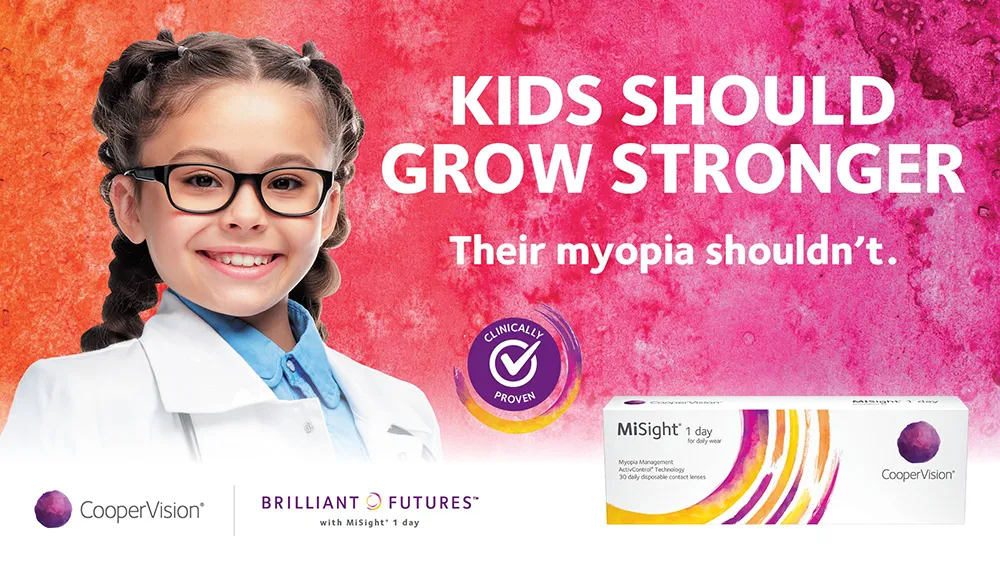
MiSight® 1 day contact lenses
MiSight® 1 day contact lenses are the first and only FDA-approved soft contact lenses proven to slow myopia progression in children ages 8–12 at the start of treatment.¹ These daily disposable lenses correct distance vision while supporting healthier long-term eye development.
Clinical studies show that over three years, children wearing MiSight® contact lenses experienced an average 59% slower progression of nearsightedness, and 41% of children had no progression at all. These lenses offer a convenient, effective way to manage myopia while keeping vision clear.
HOYA MiYOSMART Spectacle Lenses
For kids who aren’t ready for contact lenses, Hoya MiYOSMART is a great spectacle-based option. These lenses use revolutionary D.I.M.S. Technology to combine your child’s full prescription with a honeycomb-shaped treatment zone that helps slow eye elongation—all in one everyday lens. Clinical studies show MiYOSMART slows myopia progression by an average of 60% compared to standard single vision lenses.²
Built for active kids, MiYOSMART lenses are made to keep up, whether your child is hitting the books or the playground:
- An anti-reflective coating for clear, comfortable vision
- Scratch-resistant protection for everyday durability
- Advanced hydrophobic treatment that keeps lenses cleaner for longer, standing up to daily wiping for nearly three years
Referrals for myopia treatment
If more advanced methods are needed, we can also refer patients to Dr. Erica Wu at Advanced Vision Optometry, an optometrist in Santa Rosa, for options like ortho-k or atropine treatment.
How lifestyle can impact myopia progression
Research increasingly shows that the way children spend their time can affect how quickly myopia progresses. Parents can help protect their children’s vision by encouraging the following daily habits:
- Set limits on screen time: Try to reduce long stretches of device use, since increased daily screen time has been linked to a higher risk of developing myopia.³
- Encourage more time outdoors: Make outdoor play part of your child’s daily routine, as time outside may help slow myopia progression.⁴
- Remind them to take breaks: Teach your child habits like the 20-20-20 rule—looking 20 feet away every 20 minutes for 20 seconds—to help reduce eye strain.
- Promote healthy visual habits: Encourage your child to hold books and screens at a comfortable distance instead of too close for long periods.
While lifestyle changes are important, they may not be enough to control myopia progression on their own. That’s why eye care professionals often recommend a personalized management plan alongside regular check-ups, to ensure your child’s vision is being actively protected.
Effective treatment for myopia management
If you’re looking for effective myopia treatment solutions in Lakeport, contact Konocti View Optometry today. Our team looks forward to helping you or your child see clearly and live life to the fullest!
References:
- MiSight® today. Anything tomorrow. coopervision.com
- Defocus Incorporated Multiple Segments (DIMS) spectacle lenses slow myopia progression: a 2-year randomised clinical trial. pubmed.ncbi.nlm.nih.gov
- Digital screen time and myopia: how much is too much? myopiaprofile.com
- Time spent outdoors as an intervention for myopia prevention and control in children: an overview of systematic reviews. pmc.ncbi.nlm.nih.gov
Frequently asked questions about myopia
Can myopia be reversed once it starts?
How much screen time is safe for my child’s eyes?
Research suggests that keeping daily screen time under an hour may help reduce myopia risk in children. That said, it’s not just about time—how your child uses screens matters too. It’s important to encourage your child to hold devices at a comfortable distance, take regular breaks, and make sure the room is well lit.
Why are annual eye exams necessary if my child's prescription hasn't changed much?
Even if your child’s prescription seems stable, there can still be changes happening that aren’t obvious. Annual eye exams allow their eye doctor to monitor how the eye is growing—not just how clearly your child can see. Subtle changes, like increases in eye length, can be an early sign that myopia is progressing. Catching this early makes it easier to adjust treatment and better protect your child’s vision over time.