
Call
Text

Cataract Diagnosis & Co-Management in Lakeport
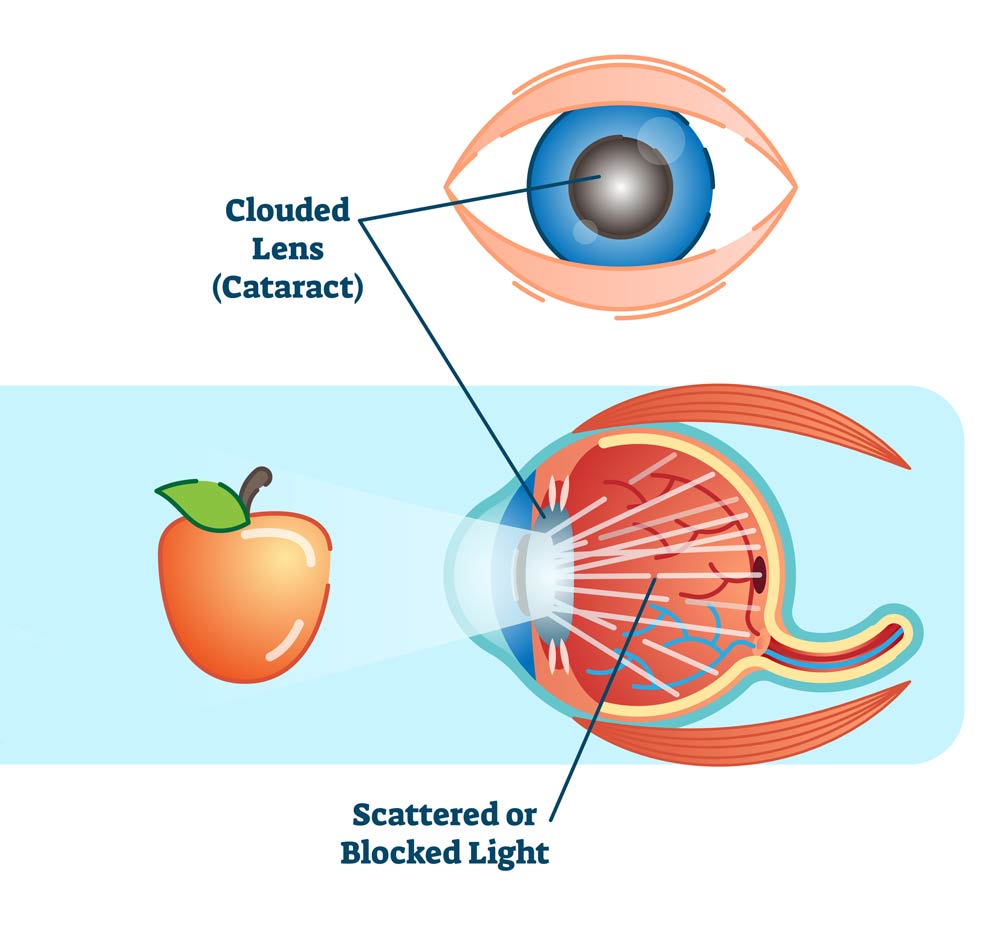
If you’re experiencing foggy or blurry vision, cataracts might be the cause. A cataract is a cloudy area that develops in your eye’s lens and causes vision loss over time. Over half of Americans age 80 and older either have cataracts or have already undergone cataract surgery to remove them.¹
At first, you may not have any symptoms since cataracts tend to develop slowly. As the cataract grows larger, you may develop blurry vision, have trouble seeing at night, become sensitive to light, see halos around lights, or notice that colors seem faded.
Our skilled eye doctor, Dr. Emmalena Boyd, is experienced in diagnosing and treating a wide range of eye issues, including cataracts. If surgery becomes necessary, we will refer you to a trusted ophthalmologist and provide follow-up care.
Cataract treatment in Lakeport
Treatment for cataracts will depend on how much they are bothering you. For most people, surgery isn’t necessary right away.² Cataracts develop slowly, so your eyesight will gradually get worse.
Early on, certain lifestyle changes can help manage the symptoms, such as using a magnifying glass when reading small print or ensuring your home is well-lit. A new prescription for glasses or contact lenses may also temporarily restore your vision.
When is cataract surgery necessary?
When glasses or contact lenses are no longer able to provide clear vision, the only effective treatment for cataracts is surgery.² Cataract surgery is a very safe and effective procedure where a surgeon removes your cloudy lens and replaces it with an artificial lens. We can discuss the risks and benefits of cataract surgery, answer your questions, and refer you to a trusted ophthalmologist for the procedure.
Before referring a patient for cataract surgery, Dr. Boyd takes the time to review the different intraocular lens (IOL) options available for implantation during surgery. These may include:
- Single vision lenses (distance or near)
- Monovision
- Multifocal lenses
- Extended range of focus lenses
She helps you understand your options, consider what best fits your lifestyle and visual goals, and includes personalized recommendations in her referral to the ophthalmologist.
What happens after cataract surgery?
Dr. Boyd co-manages cataract post-operative care with experienced ophthalmologists in Lake and Sonoma counties. She may refer you to Eric Kahle, MD, at Eye Associates Medical Group, or Nina Ni, MD, or Avni Shah, MD, at Eye Care Institute.
After your surgery, we’ll schedule visits to monitor your healing, check your vision, and ensure you’re recovering as expected.
Visit us for expert cataract care in Lakeport
Cataracts are common, but they can cause more serious eye issues if left untreated. If your vision is blurry or you’re having trouble seeing at night, schedule an appointment with our eye doctor today!
References:
Cataracts FAQ
What are cataracts?
Cataracts are a clouding of the eye’s natural lens, which sits behind the iris. Over time, this cloudiness can make vision blurry, hazy, or less colorful, and can interfere with daily activities like reading or driving.
What causes cataracts?
Cataracts most commonly develop as a natural part of aging. However, other factors can contribute, including long-term sun exposure, smoking, certain medical conditions like diabetes, eye injuries, and prolonged use of steroid medications.
How can I prevent cataracts?
While cataracts can’t always be prevented, you can reduce your risk by wearing UV-protective sunglasses, not smoking, managing health conditions like diabetes, and maintaining regular comprehensive eye exams to monitor changes early.
What are the symptoms of cataracts?
Common symptoms include:
- Blurry or cloudy vision
- Increased sensitivity to light
- Difficulty seeing at night
- Halos around lights
- Faded or yellowed colors
- Frequent changes in glasses or contact lens prescriptions
Can cataracts be reversed?
Cataracts cannot be reversed with medication, eye drops, or glasses. However, they can be effectively treated with cataract surgery, where the cloudy lens is removed and replaced with a clear artificial lens to restore vision.