
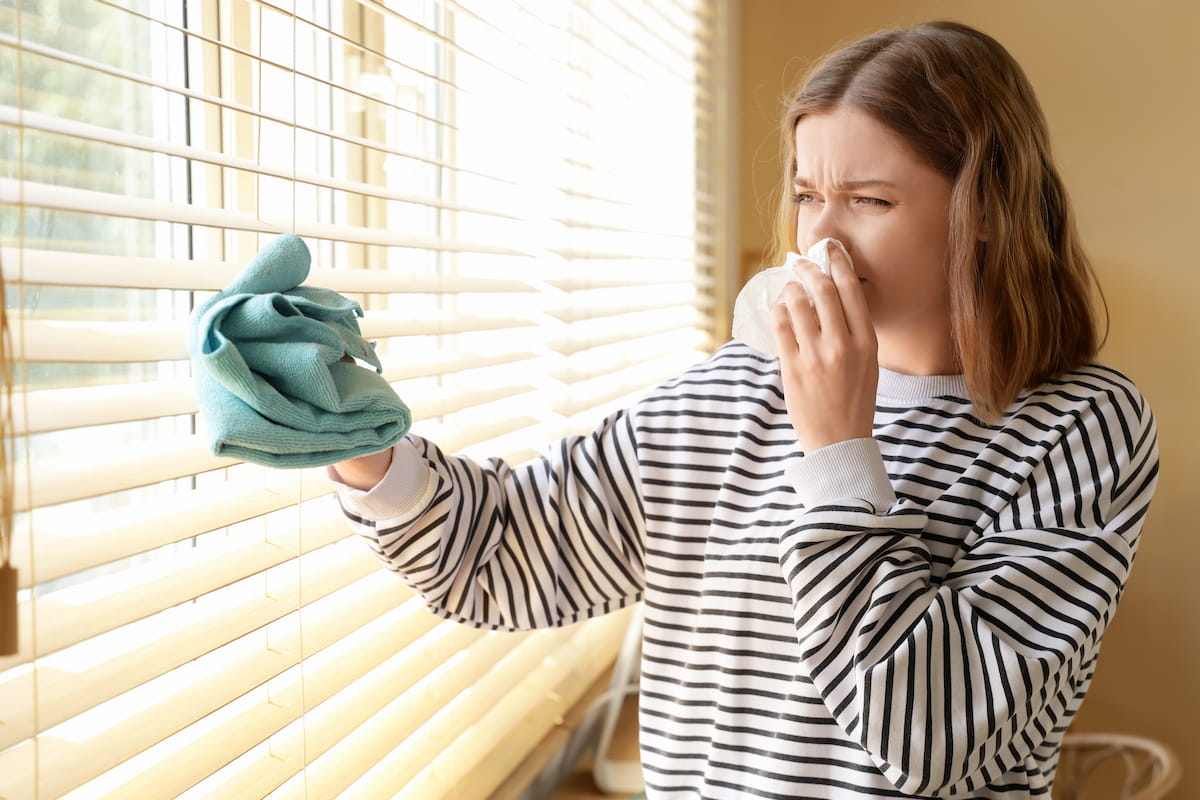
Itchy eyes do not always disappear when spring and summer pollen levels ease. In fall, time spent indoors can increase exposure to dust mites, pet dander, and mold, all of which can trigger allergic conjunctivitis treatment needs. If your eyes are persistently itchy, watery, red, or swollen, indoor allergens may be part of the reason.
Why can eye allergies continue in the fall?
Fall is not necessarily the end of allergy season. Outdoor mold spores and certain weed pollens can remain present well into the season. At the same time, cooler weather often means closed windows and more time indoors, where allergens can build up.
For many people, the shift from outdoor pollen to indoor triggers is why symptoms feel like they never fully go away.
Which indoor allergens can make eyes itch?
Allergens are substances that prompt the immune system to release histamine. In the eyes, this response can cause itching, redness, tearing, and eyelid swelling.
Common indoor triggers include:
- Dust mites: These microscopic pests thrive in bedding, upholstered furniture, carpets, and other soft surfaces.
- Pet dander: Tiny flakes of skin from cats and dogs can linger on furniture, clothing, and in the air.
- Mold: Damp bathrooms, kitchens, basements, and areas with water damage can allow mold to grow.
- Dust: Household dust can contain a mix of allergen particles, including pollen tracked indoors from outside.
Try washing bedding regularly in hot water, using a HEPA vacuum or air purifier, and keeping indoor humidity low enough to discourage dust mites and mold. These steps can reduce exposure, but they may not fully resolve symptoms.
Could dry eye be making allergy symptoms worse?
Yes. Ocular allergies and dry eye disease are different conditions, but they can occur at the same time and aggravate each other. Allergy inflammation can disrupt the tear film, while dry eyes may feel more sensitive to allergens and environmental irritants.
Itching is the hallmark symptom of eye allergies. Dry eye more often causes burning, grittiness, fluctuating vision, or a tired sensation. Still, symptoms can overlap, and using the wrong drops may provide only brief relief.
Avoid relying on redness-relief drops, which do not treat the allergic response and can sometimes worsen redness with frequent use. An eye doctor can recommend treatment based on what is actually causing your discomfort.
Get answers for persistent itchy eyes
Persistent eye itching deserves more than trial and error in the eye-drop aisle. A comprehensive eye exam can help determine whether allergies, dry eye, or both are affecting your eyes and identify the right treatment approach.
Do not keep putting up with red, watery, uncomfortable eyes this fall. Schedule an eye exam to get lasting relief.